

 3:30 am - March 23, 2026
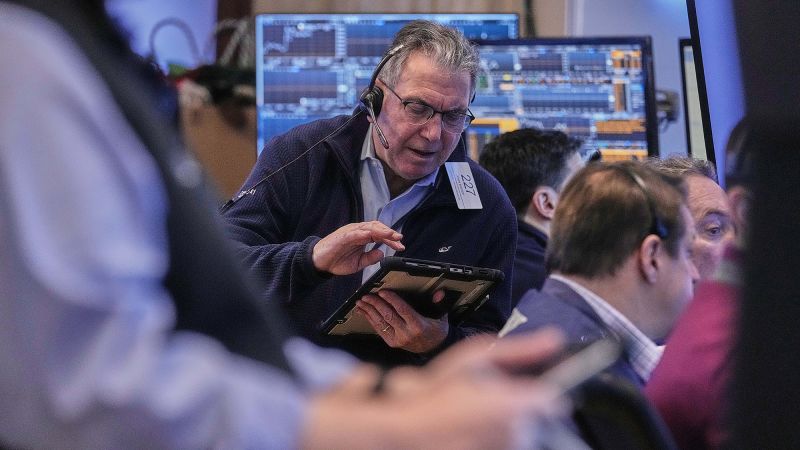
Investors revived the “Sell America” trade Tuesday, dumping US stocks, bonds and the dollar following escalating tensions between President Donald Trump and European leaders over Greenland ownership. The market selloff reflected growing concerns about transatlantic relations and the potential for further trade escalation between the United States and Europe.
The Dow closed lower by 871 points, or 1.76%, according to market data. The broader S&P 500 fell 2.06%, while the tech-heavy Nasdaq Composite slid 2.39%. Both the S&P 500 and Nasdaq wiped out their gains for the year in the session.
All three major indexes recorded their worst day since October 10, when Trump had threatened to impose higher tariffs on imports from China. The simultaneous decline in US stocks, bonds and the dollar marked a concerning shift in investor sentiment toward American assets.
Dollar Weakness Signals Investor Concerns
The dollar index, which measures the dollar’s strength against six major currencies, fell 0.8% Tuesday—a significant move in currency markets. The dollar index posted its worst day since August, while the euro gained 0.65% against the dollar.
Additionally, Treasury yields surged as bond prices fell. The benchmark 10-year US Treasury yield rose to 4.29%, while the 30-year Treasury yield jumped to 4.92%. Both yields hit their highest level since September, according to market reports.
Market Volatility Spikes
“This is ‘Sell America’ again within a much broader global risk off,” Krishna Guha, vice chairman at Evercore ISI, said in a note. “The fact that the dollar is falling while the euro is rising on the crisis says global investors at the margin are looking to reduce or hedge their exposure to a volatile and unreliable US.”


The VIX index, commonly known as the fear gauge, surged 28% and posted its biggest single-day jump since October. The VIX rose above 20 points for the first time since November, a level that signals elevated market volatility.
Trade Tensions Drive Sell America Sentiment
Trump on Sunday threatened a new 10% tariff on imports from eight European countries including Denmark, the United Kingdom and France. The threats came amid his demands that the United States should acquire the Danish territory of Greenland.
However, US stock and bond markets were closed Monday in observance of Martin Luther King, Jr., Day. Tuesday marked the first full day for US stock and bond traders to react to the extraordinarily newsy weekend and flaring trade tensions between the United States and Europe.
Meanwhile, a snap election in Japan also rattled markets in Asia. Japanese bond yields surged higher due to concerns about Prime Minister Sanae Takaichi’s proposal to temporarily cut taxes on food despite the government’s enormous debt load.
“I think it’s very difficult to disaggregate what the spillover from Japan is,” US Treasury Secretary Scott Bessent said Tuesday at the World Economic Forum in Davos, Switzerland. “I’ve been in touch with my economic counterparts in Japan, and I am sure that they will begin saying the things that will calm the market down.”
European Markets Feel the Pressure
Europe’s benchmark Stoxx 600 index closed lower by 0.7% Tuesday. The Stoxx 600 on Monday fell 1.19% and posted its worst day since November, reflecting ongoing uncertainty about trade relations.
In contrast, Denmark’s OMX Copenhagen 20 index rose 1.13% Tuesday after falling 2.73% Monday. The Monday decline represented the worst day for Danish stocks since October, according to exchange data.
Investors Watch for Supreme Court Decision
“Markets will trade risk-off, but bet that either the Supreme Court will take away Trump’s authority to impose tariffs in this manner, or Trump will deliver a TACO reversal anyway,” Guha at Evercore ISI said in a Monday note. TACO is a Wall Street acronym for “Trump Always Chickens Out.”
The Supreme Court is deliberating the legality of the president’s use of the International Emergency Economic Powers Act of 1977 to implement tariffs. That pending ruling would have direct implications for Trump’s renewed threat of additional tariffs on imports from some European countries.
Sarah Bianchi, chief strategist of international political affairs and public policy at Evercore ISI, warned that “investors should be prepared for the likelihood that we are still on the way up in the ‘escalate to de-escalate’ cycle, and that the headlines could get worse before they get better.” The EU is readying potential retaliation, including tariffs and possible use of the anti-coercion instrument—better known as Europe’s “trade bazooka.”
Safe Haven Assets Rally
Elsewhere, metals soared as investors sought safe havens from market turbulence. Gold futures jumped 3.6% and hit a record high above $4,750 a troy ounce, while silver futures surged 6.3% and earlier briefly hit a record high above $95 a troy ounce.
Meanwhile, bitcoin fell 3.9% across the past 24 hours and dropped below $90,000 Tuesday afternoon. “It’s another geopolitical crisis instigated by President Trump,” Ed Yardeni, president of Yardeni Research, told CNN. “The market learned from last year’s tariff crisis that the president uses tariffs as a negotiating bat.”
Market participants are now waiting for further developments, particularly the Supreme Court’s ruling on presidential tariff authority and any potential de-escalation in US-Europe tensions. The timing of these developments remains uncertain, leaving investors to navigate continued volatility in the near term.


