
 9:04 am - March 23, 2026
As Super Bowl 60 approaches, advertisers are preparing to compete for the attention of more than 120 million viewers with commercial spots that showcase celebrity power, artificial intelligence innovation, and emerging health trends. The battle for Super Bowl advertising dominance features record-breaking prices and a diverse mix of brands hoping to make memorable impressions during one of television’s most-watched events.
Airing Sunday on NBC, Super Bowl 60 has attracted dozens of major advertisers deploying celebrities ranging from Kendall Jenner for Fanatics Sportsbook to George Clooney for Grubhub. According to NBC, all advertising space sold out in September, with spots averaging $8 million per 30-second unit and some premium placements commanding over $10 million.
Record Demand for Super Bowl Advertising Slots
The premium pricing reflects unprecedented demand driven by the game’s massive reach. In 2025, a record 127.7 million U.S. viewers watched the Super Bowl across television and streaming platforms, according to Nielsen data. Peter Lazarus, executive vice president of sports and Olympics advertising for NBCUniversal, said 40% of advertisers purchased spots across multiple NBC sports properties, while 70% of Super Bowl advertisers also bought Olympics inventory.
Live sporting events remain one of the few opportunities for brands to reach large audiences in an increasingly fragmented media landscape. The combination of guaranteed viewership and cultural relevance makes the Super Bowl advertising investment worthwhile for major brands despite the steep costs.
Celebrity-Studded Campaigns Dominate
Many advertisers are leveraging star power to capture viewer attention. Fanatics Sportsbook features Kendall Jenner discussing the “Kardashian Kurse” affecting basketball players she dates. Meanwhile, Grubhub enlisted George Clooney to promote a fee-waiver promotion for orders exceeding $50.
Additionally, Michelob Ultra reunites Kurt Russell with actor Lewis Pullman alongside Olympic snowboarder Chloe Kim and hockey player T.J. Oshie in a ski slope setting. Comcast Xfinity brings together Sam Neill, Laura Dern, and Jeff Goldblum for a nostalgic “Jurassic Park” reunion showing an Xfinity technician restoring power to prevent disaster.


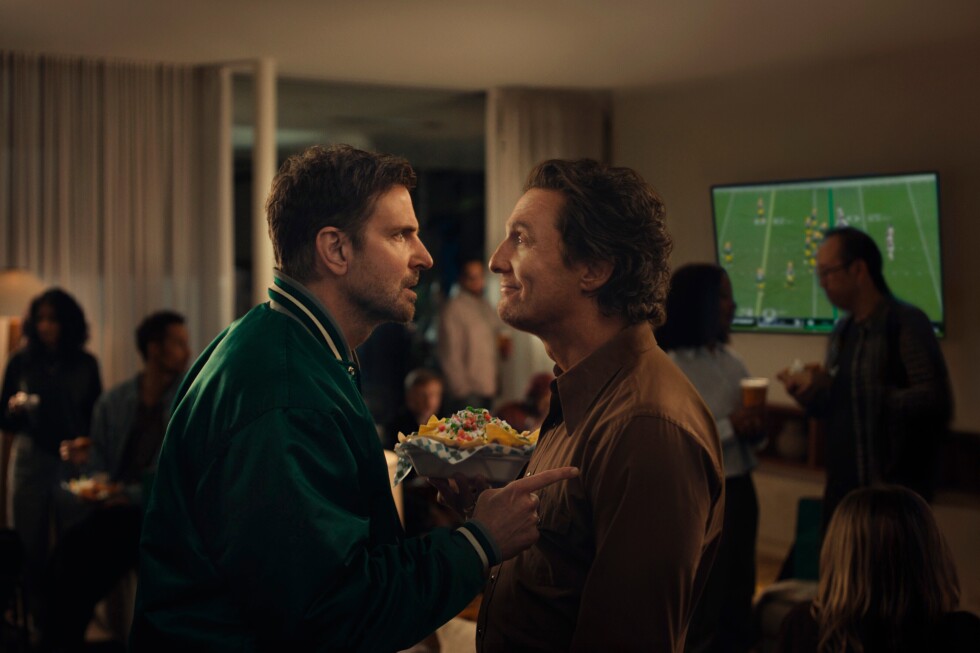
Uber Eats continues its partnership with Matthew McConaughey for the second consecutive year. This time he teams with Bradley Cooper and Parker Posey to present a humorous conspiracy theory suggesting football exists to make people hungry for food delivery.
Artificial Intelligence Takes Center Stage
For the second year running, AI features prominently in Super Bowl commercials. Oakley Meta showcases AI-enabled glasses in spots featuring Spike Lee and Marshawn Lynch using the technology to film video and answer questions hands-free.
Wix is advertising both its Harmony web design software with AI tools and Base44, an AI app builder. OpenAI will also advertise during the game, though the company has not revealed its commercial content. Svedka Vodka partnered with Silverside AI to create an advertisement featuring robot mascots FemBot and BroBot, according to Sara Saunders, chief marketing officer at Sazerac.
“We reimagined the robot via AI,” Saunders said. “It took us many, many months to rebuild her, to give her functionality, to give her that human spirit that we wanted to show up on behalf of the brand.”
Health and Weight Loss Drugs Feature Prominently
Health and telehealth companies represent a significant advertising category this year. Novartis promotes a blood test for prostate cancer screening with the tagline “Relax your tight end,” while Boehringer Ingelheim features Octavia Spencer and Sofia Vergara encouraging kidney disease screening.
However, weight loss medication advertisements are particularly notable. Telehealth provider Ro features tennis star Serena Williams in an ad for GLP-1 weight loss drugs, while Novo Nordisk, maker of Wegovy and Ozempic, has confirmed a commercial appearance. Hims & Hers promotes its GLP-1 offerings by highlighting healthcare accessibility typically reserved for wealthy individuals.
“You could call this the GLP-1 Super Bowl,” said Tim Calkins, a clinical professor of marketing at Northwestern University. “Often you don’t see a lot from pharmaceutical companies on the Super Bowl, but this year we’re going to see quite a few showing up.”
Traditional Approaches Still Resonate
Some brands are sticking with proven formulas. Budweiser celebrates its 150th anniversary with a heartwarming spot showing a Clydesdale foal growing up alongside a bald eagle set to Lynyrd Skynyrd’s “Free Bird.” In contrast, Pepsi attempts to reignite cola rivalry by featuring Coca-Cola’s polar bear mascots choosing Pepsi Zero Sugar in a blind taste test.
According to Villanova University marketing professor Charles Taylor, the lighthearted tone reflects current events. Given heavy news coverage of immigration enforcement and international conflicts, he expects advertisers to provide escapism. “The vast majority of brands will avoid any dark or divisive tone and instead allow consumers to escape from thinking about these troubled times,” he said.
Several advertisers are withholding their complete commercials until game day to maximize surprise impact. Poppi teased that Charli XCX and Rachel Sennott will appear in its spot, while Ben Affleck returns for Dunkin’ Donuts alongside sitcom legends from “Friends” and “Seinfeld.” Cadillac has hinted at showcasing its new Formula 1 car, though full details remain under wraps until Sunday’s broadcast.